Story 01 / Student reader
The Lottery
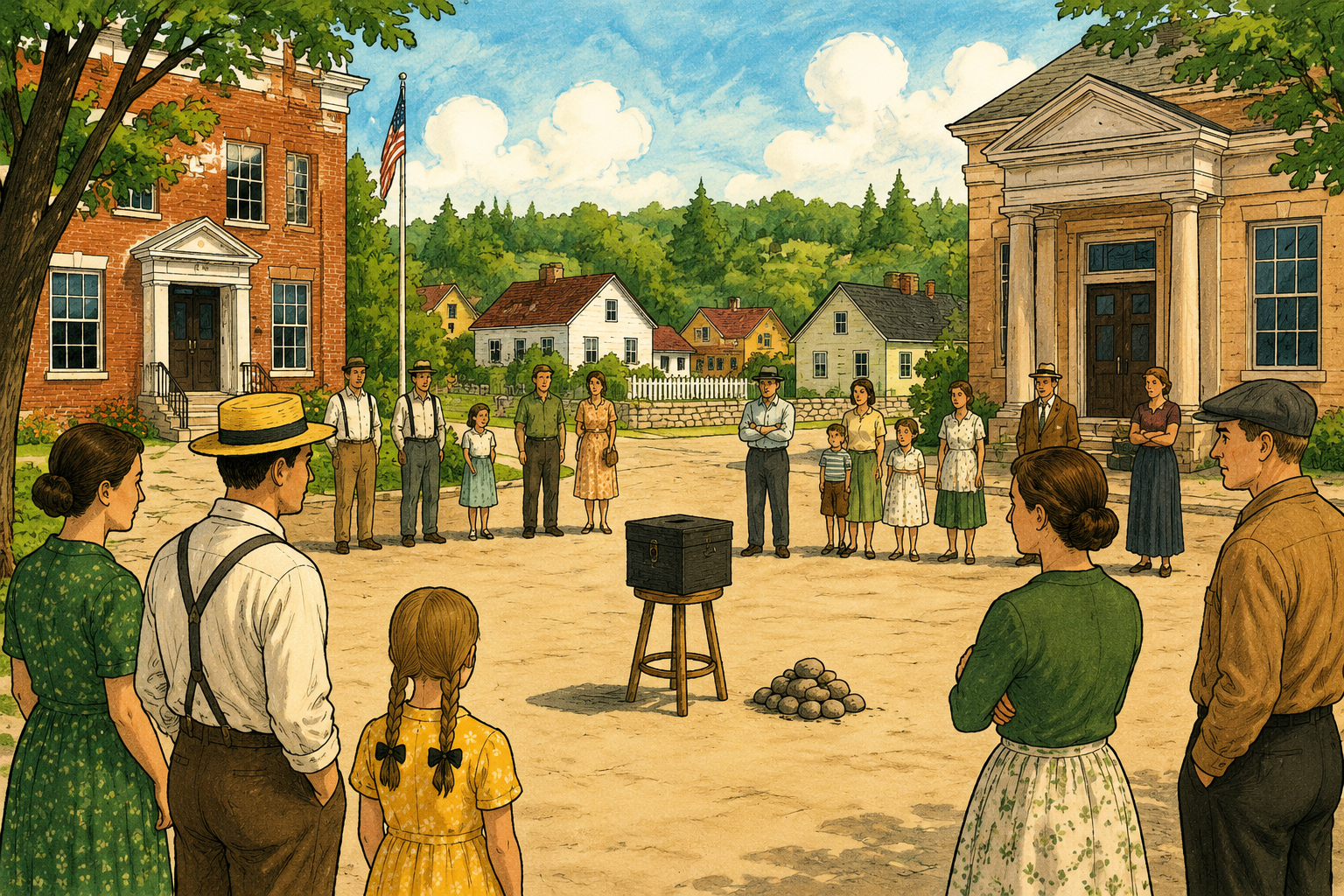
Read a peaceful village scene, notice what feels normal, and decide what the tradition is asking people to accept.
Original source. The complete story remains with its authorized publisher.
Open The New Yorker /01 / Read first
Start with the original story.
This story is still protected by copyright, so the complete text is available at The New Yorker. Read there first, then return here for language help and your quiz.
The full text is at The New Yorker
Open the authorized source, read the story, and come back when you are ready to answer. A short opening passage is included below for study.
Open original text“The children assembled first, of course. School was recently over for the summer, and the feeling of liberty sat uneasily on most of them.”Opening passage / Shirley Jackson
Reading note: The opening pairs children, summer and a village square with a ritual the reader does not yet understand.
02 / Vocabulary
Build the words you need.
These 50 K12-friendly words and phrases come from the story world. Read the part of speech and IPA first, then read the English explanation before checking the Chinese meaning. Use Listen for Google's English pronunciation.
- assembled firstassembled = gathered together最先集合起来
- sat uneasilywith discomfort or uncertainty不安地存在或感受
- stuffed his pockets full offilled something tightly把口袋塞满了
- give me a handan informal request for help帮我一下
- set the box downplace something on a surface把盒子放下
- get on without youcontinue when someone is absent没有你也继续进行
- made up the slipsmade up = prepared or assembled准备好纸条
- fade offbecome less active or noticeable逐渐淡掉或不了了之
- village squarean open public place in a village村庄广场
- clear and sunnybright, with no clouds晴朗的
- warm daya day with pleasant heat温暖的一天
- blossoma flower on a tree or plant花朵,开花
- gathercome together in one place聚集
- scufflea short, rough fight小打斗,推搡
- pilea group of things placed together堆
- pebblea small smooth stone小圆石
- selectchoose one thing from several选择
- rituala repeated formal action仪式,固定程序
- traditiona custom passed through generations传统
- ceremonya formal public event典礼,仪式
- annualhappening once every year每年的
- conductorganise or carry out an event进行,组织
- propercorrect for a particular situation合适的,正规的
- solemnserious and not cheerful严肃庄重的
- nervousworried about what may happen紧张的
- hesitatepause before making a choice犹豫
- exchange glanceslook at each other briefly交换眼色
- look over one's shoulderlook behind you, often with worry回头看,警惕地看
- murmurspeak in a low, quiet voice低声说,喃喃自语
- crowda large group of people together人群
- householdthe people living in one home家庭,住户
- representativea person who acts for a group代表
- draw a slipchoose a folded piece of paper抽一张纸条
- foldedbent over so one part covers another折叠的
- marka sign used to identify something标记
- announcetell people news officially宣布
- customa usual way of behaving in a group习俗
- abandonstop doing or supporting something放弃
- replaceput a new thing in the place of another替代
- comply withdo what a rule or person requires遵守,服从
- protestsay or show that you disagree抗议
- squarelydirectly and without avoiding the issue直截了当地,正对着
- ordinarynot special or unusual普通的,平常的
- uneasyslightly worried or uncomfortable不安的
- familiarknown from past experience熟悉的
- unfairnot treating people equally or justly不公平的
- blamesay someone is responsible for a problem责备,责任
- obeydo what an authority tells you服从,遵守
- belong tobe owned by or connected with someone属于
- take part injoin an activity or event参加
- in publicwhere other people can see公开地,在公共场合
- at firstat the beginning of a situation起初
- all at oncesuddenly or at the same moment突然,同时
- as usualin the way that normally happens像往常一样
- carry oncontinue doing something继续
03 / Reading quiz
Show what you noticed.
Answer in short, clear English. Start speaking within five seconds, use one detail from the story, and do not worry about a perfect answer.
04 / After class
One small repeat keeps the skill.
Spend 5-8 minutes this week. This is the long-term habit from summer: quick start, short retell, one better second answer.
5-8 minutesComplete after the lesson.
What is the biggest problem in this story?
Drafts save on this device.